
Ultrasound
Therapeutic ultrasound to support tissue healing and manage pain, offered at Peak Physiotherapy in Mayville, Pretoria.
- No referral needed
- Medical aid billed directly
- Full-hour assessment
Introduction
Ultrasound therapy is a well-established physiotherapy modality that uses high-frequency sound waves to deliver energy into injured or painful tissues. Unlike diagnostic ultrasound (used for imaging), therapeutic ultrasound is used to support tissue healing, reduce pain, and improve movement.
At our practice in Pretoria, The Moot, and Mayville, ultrasound is always used as part of a broader physiotherapy plan, ensuring it adds direct value to your specific diagnosis and recovery goals, never applied as a default addition to every session.
Ultrasound is one of several tools used selectively at Peak Physiotherapy, alongside techniques like therapeutic exercise and joint mobilisations, chosen based on what your specific assessment shows will actually help, not applied by default.
Where Did Ultrasound Therapy Originate?
The therapeutic use of ultrasound in medicine dates back to the early 20th century, with applications developing after World War I as researchers explored using sound wave technology, originally developed for other purposes, for therapeutic effect on the body's tissues.
It became more widely adopted in physiotherapy practice during the 1950s, particularly for treating soft tissue injuries, joint stiffness, and chronic pain conditions, at a time when few other tools existed for reaching tissue beneath the skin's surface without surgery.
Modern machines now offer far more precise control over depth, frequency, and intensity than early equipment, and the scientific understanding of what ultrasound actually does at a tissue level has been substantially refined since. This is part of why its use today is more selective and evidence-informed than in earlier decades, when it was sometimes applied more broadly than the evidence actually supported.
How Ultrasound Works
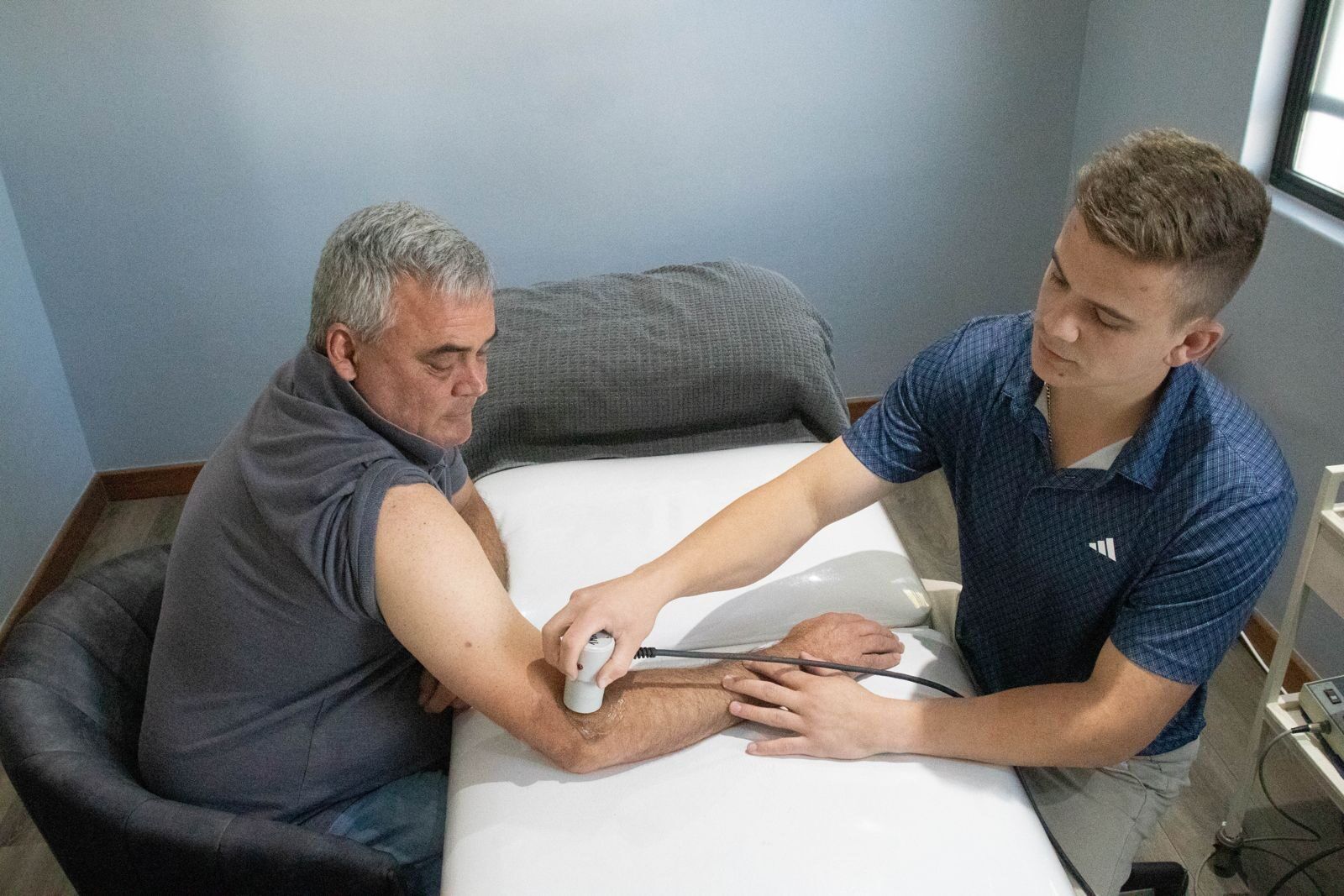
Ultrasound therapy works by sending sound waves into the body through a handheld treatment head. These sound waves cause tissues to vibrate at a microscopic level, creating specific biological effects inside the tissue.
- Microscopic vibration within the tissue is thought to create a mild heating effect (with continuous ultrasound) or stimulate cellular activity without heating (with pulsed ultrasound)
- This vibration may increase local blood flow and cell membrane permeability, potentially supporting the tissue's own repair processes
- In deeper tissues like joint capsules and tendons, the effect can help improve extensibility and reduce stiffness
- The specific setting, frequency, intensity, and continuous versus pulsed mode, is selected based on your presentation and the depth of tissue being targeted
Types of Ultrasound
Continuous ultrasound delivers a steady stream of sound waves, gently warming deeper tissues like muscles and joint capsules. This can help improve tissue extensibility and reduce stiffness, and is generally used for more chronic, stiffness-dominant presentations.
Pulsed ultrasound delivers sound waves in short bursts, aiming to stimulate cellular activity without a significant heating effect. This is often preferred for acute or early-healing-phase injuries, where heating the tissue isn't the goal.
Your physiotherapist selects which mode, and at what setting, based on your specific presentation and stage of healing.
Evidence & Research Support
Evidence on therapeutic ultrasound is mixed and depends heavily on correct dosing, the specific condition, and combining it with active rehabilitation. It's generally not considered an effective treatment used entirely on its own.
This is worth being direct about: ultrasound was more widely and confidently used in physiotherapy in past decades than current evidence fully supports. More recent, higher-quality research has generally found its effects to be more modest than earlier assumed, particularly as a standalone intervention. This doesn't mean it has no role, but it does mean the honest position is that it's a selectively-used supportive tool, not a primary treatment.
At Peak Physiotherapy, ultrasound is used selectively, based on your specific diagnosis, as one part of a broader treatment plan rather than a default modality applied to everyone.
Benefits of Ultrasound
When it's genuinely appropriate for your presentation, ultrasound aims to:
- Contribute to pain modulation alongside other treatment
- Support the tissue repair process in tendons and ligaments during the healing phase
- Reduce stiffness to help tissues move more freely before rehabilitation exercises
- Reach deeper structures that surface-level treatment can't easily access
What to Expect During a Session
Ultrasound is applied as part of your broader physiotherapy session, not as a separate appointment.
- A clear gel is applied to the skin, and the therapist moves the ultrasound head slowly and continuously over the treatment area
- Treatment typically lasts 5 to 10 minutes within your broader session
- Most patients feel no pain, sometimes a mild warmth, but often nothing at all
- No downtime afterward. You can return to normal activity immediately following treatment
Conditions & Clinical Uses
Ultrasound therapy may be considered for:
Tendinopathies
(e.g. Achilles, patellar, rotator cuff) may benefit from ultrasound used selectively alongside progressive loading exercise, which remains the primary treatment for tendon-related conditions. See therapeutic exercise.
Muscle strains and tears
may respond to ultrasound as a supportive modality during the healing phase, alongside guided rehabilitation for conditions like thigh strains.
Ligament sprains
can benefit from ultrasound supporting tissue healing in presentations like ankle sprains.
Joint stiffness or capsular tightness
may respond to ultrasound helping improve tissue extensibility before mobility work, relevant for conditions like frozen shoulder within shoulder pain presentations.
Scar tissue and post-surgical rehabilitation
may include ultrasound as part of a broader post-surgical rehabilitation plan where appropriate.
Chronic soft tissue pain conditions
are sometimes supported by ultrasound, used selectively where it's judged to add value alongside active rehabilitation.
How Ultrasound Fits into Your Treatment Plan
Ultrasound on its own doesn't build the strength or address the movement patterns that support lasting recovery. That's why, when it's used at all, it's applied within a physiotherapy session that includes:
- A physical assessment to confirm ultrasound is genuinely appropriate for your presentation and stage of healing
- Exercise prescription, which remains the primary treatment for most conditions ultrasound supports
- Other manual therapy where relevant, such as joint mobilisations
- Regular reassessment to confirm ultrasound continues to add value as your treatment progresses
Ultrasound adds a selective, supportive tool where it's genuinely appropriate. The rest of the session addresses everything else.
Is This the Right Treatment for You?
The best way to know is a proper assessment, not guessing based on what you've read here.
Frequently Asked Questions
Is ultrasound therapy safe?
Yes. When applied by a trained physiotherapist, it's very safe. Settings are carefully adjusted for your stage of healing.
Does ultrasound therapy hurt?
No. Most patients feel nothing or a mild warmth. If anything feels uncomfortable, treatment is stopped immediately.
Is this the same machine used for pregnancy scans?
It's related technology. Both use sound waves, but the equipment, frequency, and intensity are different, set up for treatment rather than imaging.
Is it effective on its own?
No. Ultrasound works best when combined with exercise rehabilitation, manual therapy, and education, rather than as a stand-alone treatment. It's not used as a default part of every session.
Why isn't ultrasound used as much today as it used to be?
More recent, higher-quality research has found its effects to be more modest than earlier assumed, particularly used alone. It's still a legitimate tool, but modern practice uses it more selectively and honestly than in past decades.
Can it help chronic pain?
In some cases, particularly when chronic pain involves tissue stiffness or altered loading. It's always paired with active rehabilitation rather than used alone.
Can ultrasound help me avoid surgery for a tendon injury?
Ultrasound isn't a substitute for the progressive loading exercise that's the primary evidence-based treatment for most tendon injuries. It may support that process in some cases, but the decision around surgery depends on many factors specific to your presentation and should involve your surgeon or specialist.
Do I need a referral for ultrasound therapy?
No. You can book directly. Ultrasound is included within your physiotherapy session rather than booked as a separate appointment.
Does medical aid cover ultrasound therapy?
It's typically billed as part of your physiotherapy session, so it's generally covered the way physiotherapy is under most medical aid plans. See our medical aid page for the full breakdown.
Will I get ultrasound at every session?
Not necessarily. It's used selectively where your physiotherapist judges it adds specific value to your diagnosis and healing stage, not as a routine addition to every visit.
How is ultrasound different from a TENS machine?
They're different technologies. Ultrasound uses sound waves to create effects at the tissue level (heating or cellular stimulation), while TENS uses electrical current to influence nerve pain signals. See electrotherapy for more on TENS and related modalities.
Can ultrasound help with a fresh, acute injury?
Pulsed ultrasound is sometimes used in early-stage healing, though your assessment will determine whether it's appropriate for your specific presentation and timing.
Will ultrasound show anything on a scan or report, the way diagnostic ultrasound does?
No. Therapeutic ultrasound doesn't produce images or a diagnostic report, it's a treatment technique, not an imaging tool. If you need diagnostic imaging, that's a separate referral to a radiology provider.
How many sessions include ultrasound before I stop needing it?
This varies. It's typically used for a defined period during a specific healing phase, and phased out once it's no longer adding value to your treatment plan.
Peak Physiotherapy · Mayville, Pretoria
Ready to get moving again?
Book an assessment and find out if ultrasound is right for you — no referral needed.