
Movement Analysis
Detailed assessment of how you move to pinpoint the drivers of pain and injury, at Peak Physiotherapy in Mayville, Pretoria.
- No referral needed
- Medical aid billed directly
- Full-hour assessment
Introduction
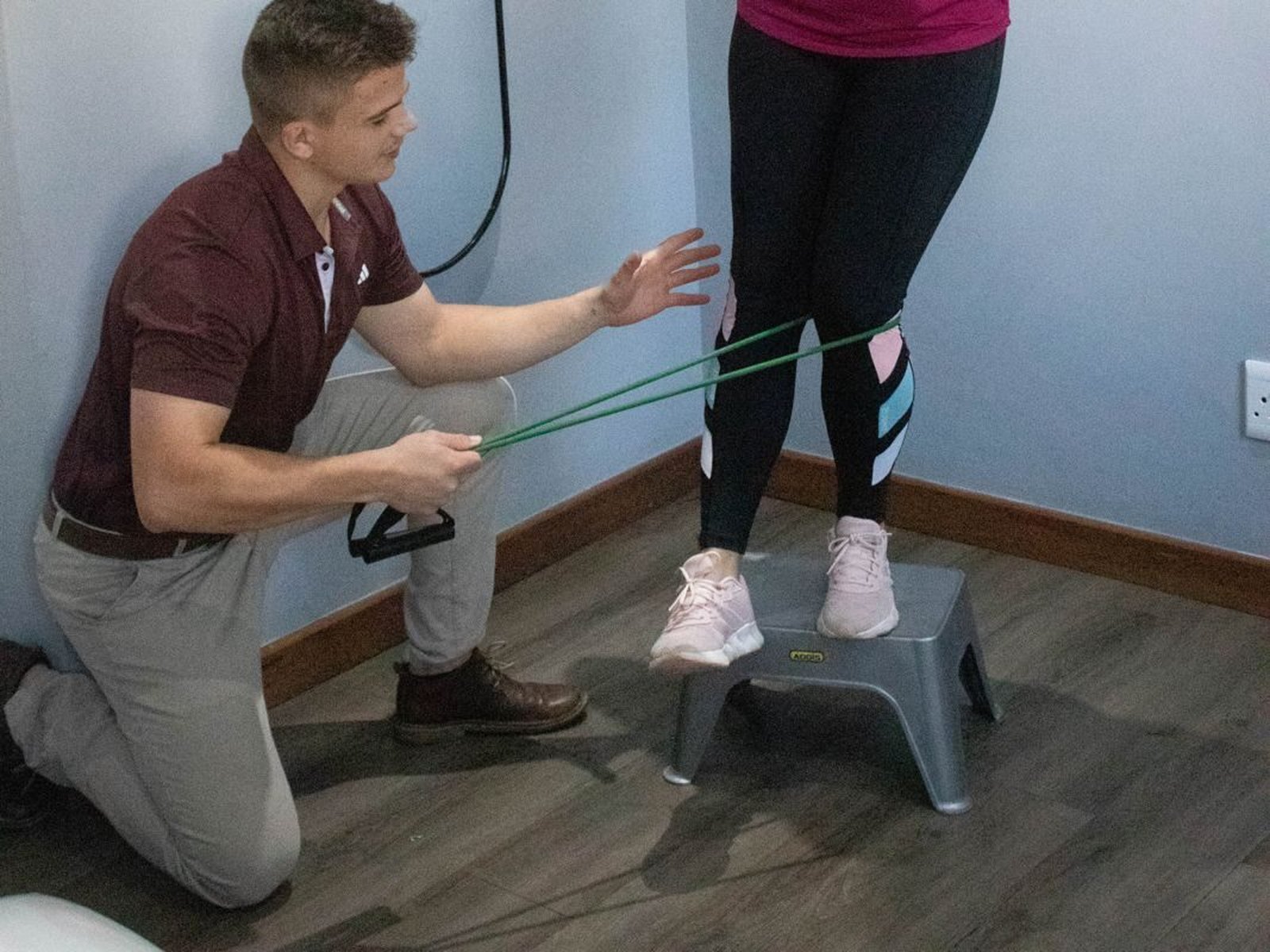
If pain keeps coming back even after treatment settles, the actual driver is sometimes somewhere else entirely, a knee that hurts because of how the hip is loading, a shoulder that flares up because of how the whole kinetic chain moves during a lift. Movement analysis is a detailed assessment of how your body actually moves during everyday tasks, sport-specific activities, or exercise, rather than only where pain is felt.
James is certified in SFMA (Selective Functional Movement Assessment) Levels 1 & 2 and FMS (Functional Movement Screen) Level 1, structured, widely-used frameworks in sports medicine and rehabilitation for identifying movement dysfunction systematically, rather than by impression alone. This training is applied throughout the practice, from general back pain and knee pain assessments through to sports and rugby injury screening.
We observe and assess your movement using visual assessment, video analysis (slow-motion where helpful), and specific functional tasks related to your job or sport, building a clear picture of what's actually driving your symptoms.
Where Did Movement Analysis Originate?
Movement analysis has its roots in biomechanics, motor control research, and sports science, fields that developed through the 20th century as researchers began systematically studying how the body coordinates movement and where breakdowns in that coordination contribute to injury.
Structured screening tools like FMS and SFMA emerged more recently, developed specifically to bring consistency and objectivity to movement assessment rather than relying purely on clinical impression. FMS was developed in the late 1990s and early 2000s for use in sports performance and injury-risk screening, while SFMA was later developed specifically for patients already experiencing pain, providing a structured framework for identifying which movement dysfunctions are actually relevant to their symptoms.
Today, both frameworks are widely taught and used internationally across physiotherapy, sports medicine, and strength and conditioning, though the specific certification and depth of training varies significantly between practitioners.
How Movement Analysis Works
During an assessment, we observe how you move through specific tasks relevant to your presentation, whether that's a squat, a lift, a running stride, or a sport-specific movement, looking beyond just where pain is felt to understand what's actually driving it. We look for:
- Poor movement control or coordination: where the body compensates or "cheats" a movement pattern rather than controlling it properly
- Muscle imbalances or compensations: one area doing more work than it should, often masking weakness elsewhere
- Joint stiffness or excessive movement: areas that are too tight or, just as often, too mobile and under-controlled
- Timing issues between muscle groups: muscles firing in the wrong sequence or at the wrong time during a movement, which can quietly overload a joint or tendon over time
SFMA vs FMS: Choosing the Right Framework
James is certified in both frameworks, and the choice between them depends entirely on your presentation:
SFMA (Selective Functional Movement Assessment) is used when pain is already present. It provides a structured way of identifying which specific movement dysfunctions are actually contributing to your symptoms, rather than just noting that movement is limited or painful in general.
FMS (Functional Movement Screen) is used proactively, without pain present, most commonly for injury-risk screening. Pre-season athlete screening is a typical application, flagging movement or control deficits before they contribute to an injury during the season ahead.
Both frameworks share the same underlying philosophy: understanding movement quality systematically, rather than relying on impression alone.
Evidence & Research Support
Movement-quality assessment is a well-established part of modern sports medicine and rehabilitation practice. The general premise is that altered movement patterns can increase load on certain tissues and contribute to injury risk or recurring pain, even when strength and range of motion test normally in isolation.
As with any assessment tool, movement screening informs clinical decision-making rather than providing a diagnosis on its own. It's one part of a broader assessment, not a standalone test.
The strongest evidence supports using movement screening to inform an individualised treatment or training plan, rather than as a standalone predictor of injury on its own. No single screening tool reliably predicts injury in isolation, which is why findings are always interpreted alongside your broader clinical picture, not used as a checklist by itself.
Benefits of Movement Analysis
Understanding how you actually move offers several benefits beyond standard symptom-focused treatment:
- Identifies the real driver: finds what's actually contributing to recurring pain, not just where it's felt
- Personalised treatment: your exercise and rehabilitation plan is built around your specific movement patterns, not a generic protocol
- Injury-risk insight: proactively flags compensations or deficits before they contribute to a future injury
- Clearer understanding: you leave with a plain-language explanation of what's happening and why, not just instructions to follow
- Better long-term outcomes: addressing the underlying movement pattern reduces the likelihood of the same problem recurring
What to Expect During a Session
During a session at our Mayville practice, you can expect a brief discussion about your goals, observation of specific movements relevant to you, and simple explanations of what we're seeing and why it matters, no guessing, just practical insight into your movement.
- Comfortable, close-fitting clothing helps, similar to gym or training wear, so movement can be observed clearly
- You'll be guided through specific tasks or movements relevant to your presentation or sport, not a generic checklist
- Video analysis, including slow-motion review, may be used where it adds clarity
- You'll leave with a clear, plain-language explanation connecting what was observed to your treatment plan
Conditions & Clinical Uses
Recurrent or persistent injuries that keep coming back despite previous treatment
are often the most valuable use case, where symptom-focused treatment alone hasn't resolved a repeating pattern of pain, whether that's knee pain, shoulder pain, or elsewhere.
Sports injuries
across running, rugby, gym-based training, and racquet sports like padel and tennis often benefit, where understanding load and movement pattern is central to both treatment and injury prevention. See Sports & Rugby physiotherapy for more.
Post-operative rehabilitation
(ACL, shoulder, spine) often incorporates movement analysis to identify compensations that may have developed during the period of restricted movement after surgery. See post-surgical rehabilitation.
Chronic low back pain
often benefits from movement analysis identifying compensatory patterns contributing to ongoing symptoms, alongside standard back pain treatment.
Building an exercise plan based on how you actually move
, rather than a generic protocol, is a core part of how treatment plans are personalised at Peak Physiotherapy.
How Movement Analysis Fits into Your Treatment Plan
Movement analysis on its own is an assessment tool, not a treatment. That's why findings are always translated into a broader physiotherapy plan that includes:
- Hands-on treatment to address any pain or restriction identified during assessment
- Exercise prescription targeted to the specific movement patterns and compensations found
- Ongoing reassessment to track how your movement changes as you progress
- Clear communication so you understand not just what to do, but why
Movement analysis adds precision to your treatment plan. The rest of the session addresses everything else.
Is This the Right Treatment for You?
The best way to know is a proper assessment, not guessing based on what you've read here.
Frequently Asked Questions
Do I need movement analysis if I already know where my pain is?
Often yes. Many patients have pain that's driven by how they move, not just the injured area itself, treating the actual driver matters for longer-term results, not just symptom relief.
Is movement analysis only for athletes?
Not at all. It's equally useful for office workers, active parents, and anyone with a recurring pain pattern, the assessment principles apply regardless of activity level.
Does it replace hands-on treatment?
No. Movement analysis informs the treatment plan, but hands-on techniques, exercise, and other treatment still form the core of your care. It's an assessment tool, not a treatment on its own.
What's the difference between SFMA and FMS?
SFMA is used with patients experiencing pain, to help identify the movement dysfunction contributing to their symptoms. FMS is more commonly used proactively, without pain present, for injury-risk screening, for example, pre-season athlete screening.
Do I need special clothing for a movement analysis session?
Comfortable, close-fitting clothing that allows you to move freely is helpful, similar to gym or training wear, so specific movements and compensations can be observed clearly.
How long does a session take?
Movement analysis is typically incorporated within your standard assessment or treatment session, though more comprehensive screening (e.g. pre-season athlete screening) may need a dedicated session. We'll advise what's appropriate for your situation.
Does medical aid cover movement analysis?
It's typically included within your physiotherapy session, so it's generally covered the same way physiotherapy is under most medical aid plans. Check your specific plan's physiotherapy benefit for detail.
Can movement analysis identify why my injuries keep recurring?
Often, yes. That's one of its primary uses. Recurring injuries frequently reflect an underlying movement pattern or compensation that symptom-focused treatment alone hasn't addressed.
Is this the same as a video gait analysis for runners?
Related but broader. Running gait analysis is one specific application of movement analysis principles, focused on running mechanics specifically. Movement analysis more generally covers a wider range of functional movements beyond running.
Do you use movement analysis for pre-season sports screening?
Yes. FMS-based screening is commonly used before a competitive season to flag movement or control deficits before they contribute to an injury, particularly relevant for rugby and other contact sports.
Can movement analysis be done as a standalone session, without an injury?
Yes, particularly for proactive FMS screening, such as pre-season athlete assessment. Get in touch to discuss whether a dedicated screening session or an assessment incorporated within a treatment visit is the better fit for your situation.
How is movement analysis different from just watching someone exercise?
The structured frameworks (SFMA and FMS) provide a systematic way of scoring and interpreting what's observed, rather than a general impression. This makes findings more consistent and allows specific compensations to be tracked over time as you progress.
Will I get a report or explanation after my movement analysis?
Yes. You'll get a clear, plain-language explanation of what was observed and how it connects to your treatment plan, not just a list of findings without context.
Do I need a referral for movement analysis?
No. It's included as part of your physiotherapy assessment, which doesn't require a referral to book.
Peak Physiotherapy · Mayville, Pretoria
Ready to get moving again?
Book an assessment and find out if movement analysis is right for you — no referral needed.