
Strapping & Taping
Supportive taping to protect, offload, and support injured tissues, offered at Peak Physiotherapy in Mayville, Pretoria.
- No referral needed
- Medical aid billed directly
- Full-hour assessment
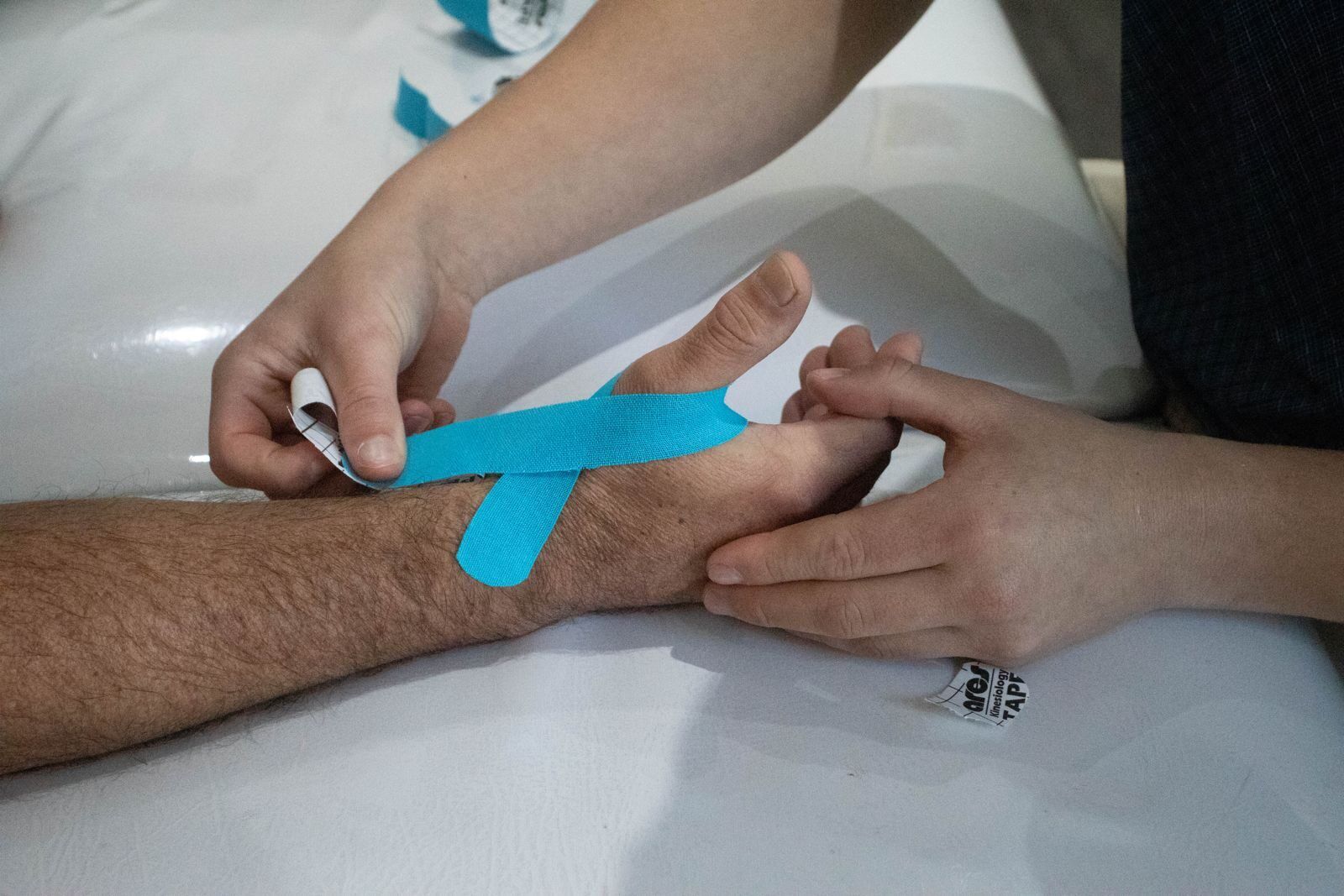
Introduction
Strapping and taping are commonly used physiotherapy techniques designed to support injured tissues, guide movement, reduce pain, and protect healing structures, without fully restricting normal function.
Taping has evolved from purely rigid athletic tape to modern elastic systems such as kinesio tape and dynamic tape. At our Mayville practice, taping is used as part of a broader treatment plan alongside exercise and manual therapy, never as a stand-alone "quick fix."
James's BokSmart Level 8 certification includes match-day taping and strapping protocols for rugby, and he applies the same structured approach to strapping for training, competition, and everyday injury support, not just guesswork with a roll of tape. This experience carries directly into sports and rugby physiotherapy at the practice, serving patients from The Moot, Wonderboom, and across Pretoria.
Where Did Strapping & Taping Originate?
Rigid athletic taping has been used in sports medicine since the early 20th century, providing firm, mechanical support to injured joints during competition and rehabilitation, an approach that remains largely unchanged in principle today.
Kinesio tape represents a more recent and distinctly different development. It was created in the 1970s by Kenzo Kase, a Japanese chiropractor, who was looking for an alternative to rigid taping, one that could support an injury without restricting the movement needed for the body's own healing process. He patented his elastic, skin-like tape by 1979.
Kinesio tape remained relatively niche outside Japan for decades, until it gained global visibility at the 2008 Beijing Olympics, where donated rolls were used openly by athletes across multiple sports. Dynamic tape, the third type used in modern practice, developed more recently still, building on the same elastic principle with a stronger recoil property suited to higher-load activities.
How Strapping and Taping Works
Different types of tape work through different mechanisms, which is part of why choosing the right one for your presentation matters.
- Rigid tape works mechanically, physically restricting excessive or harmful joint movement to protect healing tissue
- Kinesio tape is thought to work through sensory input: its light lift on the skin is believed to enhance feedback to the nervous system and may support circulation and swelling reduction
- Dynamic tape combines elastic recoil with load absorption, acting somewhat like an external spring that assists muscles and tendons during functional movement
- In every case, tape supports the body's own healing and movement, it doesn't replace the strength and control that rehabilitation exercise builds
Types of Strapping & Taping Used
Kinesio tape (elastic taping) is flexible, elastic tape designed to move with the body. It mimics the elasticity of skin to provide light support, enhance sensory input to the nervous system, and assist with swelling and circulation. Ideal for muscle strains and postural support.
Rigid strapping is the traditional white tape used for firm support with minimal stretch. It restricts excessive or harmful movement and provides mechanical stability to joints. Particularly useful for acute injuries like ankle sprains or protecting injured ligaments during return-to-sport.
Dynamic tape is a highly elastic tape with strong recoil properties. It acts like an external spring to absorb load and assist muscles during functional tasks. Frequently used for tendon injuries and high-load activities like running.
Evidence & Research Support
Research on taping is mixed depending on the type and purpose. Rigid taping has reasonably strong support for limiting excessive joint motion after injuries like ankle sprains, while elastic taping's effects are thought to be more about movement awareness and comfort than mechanical restriction.
Taping works best as one part of a broader treatment plan alongside exercise and manual therapy, rather than as a standalone treatment, which is how it's used here.
The evidence for kinesio tape specifically is worth being honest about: while many patients report genuine benefit, particularly in movement confidence and sensory feedback, high-quality research hasn't consistently demonstrated the specific physiological claims sometimes made about it, such as significantly enhanced circulation or lymphatic drainage. It remains a useful supportive tool, but the mechanism is better understood as modest and sensory-based than dramatically mechanical.
Benefits of Strapping & Taping
Used appropriately, strapping and taping aims to:
- Additional joint stability, particularly after ligament injuries such as a rolled ankle, supporting the joint during the healing phase
- Movement feedback: helping you feel and correct faulty movement patterns during rehab through the sensory input tape provides
- Support for a graded return to sport or work during the healing phase, particularly relevant for athletes managing a training or competition calendar
- General confidence and reassurance during early-stage movement, where appropriate, helping reduce fear of movement without masking a problem that needs addressing
What to Expect During a Session
Application takes just a few minutes within your broader physiotherapy session, and your physiotherapist will explain what they're applying and why before starting.
- Skin is checked and, where needed, cleaned or lightly prepared to help the tape adhere properly
- Tape is applied at a specific tension and direction depending on the technique and your presentation, not a generic wrap
- You'll be shown the intended range of motion so you can confirm it feels supportive without being overly restrictive
- Guidance is given on how long to keep the tape on, how it should feel, and when to remove it or return for reapplication
Conditions & Clinical Uses
Strapping and taping may be helpful for:
Ankle sprains and instability
are one of the most common applications, particularly rigid strapping for acute ankle protection.
Knee pain
(patellofemoral issues) often benefits from kinesio taping providing sensory feedback and light support for patellofemoral presentations. See knee pain.
Shoulder and rotator cuff conditions
often benefit from taping supporting movement awareness during shoulder rehabilitation.
Muscle strains and overuse injuries
, including hamstring and quad strains common in sports and rugby, often respond well to supportive taping during return to activity.
Tendinopathies
(Achilles, patellar, elbow) often benefit from dynamic tape's spring-like properties specifically.
Postural support and movement retraining
uses tape's sensory feedback to support awareness of posture and positioning.
How Strapping and Taping Fits into Your Treatment Plan
Strapping and taping on their own don't build the strength or control that prevents an injury from recurring. That's why they're applied within a physiotherapy session that includes:
- A physical assessment to confirm taping is genuinely appropriate for your presentation
- Exercise prescription to build the underlying strength and control tape can't provide on its own
- Guidance on when to reduce reliance on tape as your strength and confidence improve
- Coordination with your broader treatment plan, including movement analysis for sport-specific presentations
Taping adds short-term support and feedback. The rest of the session builds the lasting change.
Is This the Right Treatment for You?
The best way to know is a proper assessment, not guessing based on what you've read here.
Frequently Asked Questions
Is taping a long-term solution for pain?
No. Taping is a short-term support tool used alongside rehabilitation, not a permanent fix, the underlying issue still needs proper assessment and treatment.
Which tape is best, kinesio or rigid?
It depends on your injury and stage of healing. Kinesio and dynamic tape allow movement while providing feedback and light support; rigid tape restricts movement more firmly for acute joint protection. We'll select what suits your specific situation.
Can I exercise or play sport with tape on?
Yes. Most taping methods are specifically designed to support movement during activity, including training and competition.
How long does the tape stay on?
Kinesio and dynamic tape can last several days, including through showering. Rigid tape is usually applied for shorter periods, typically for a single training session or match.
Will tape irritate my skin?
Most people tolerate tape well, but skin sensitivity varies. Let us know if you have sensitive skin or a history of adhesive reactions so we can choose an appropriate option.
Do you supply the tape, or do I need to bring my own?
We supply the tape used during your session as part of your physiotherapy treatment.
Does medical aid cover taping?
It's typically billed as part of your physiotherapy session, so it's generally covered the same way physiotherapy is under most medical aid plans.
Can taping prevent an injury, or only support one that's already happened?
Both. Taping is commonly used both for supporting an existing injury during rehabilitation and prophylactically (preventatively) during high-risk activity, particularly for previously injured joints like ankles.
Can taping be used to prevent injuries before they happen, not just treat them?
Yes, prophylactic taping is common practice, particularly for joints with a previous injury history, such as a previously sprained ankle before a return to contact sport.
Is kinesio tape actually doing anything, or is it just placebo?
Its mechanical effect is less than rigid tape, but the sensory feedback and movement awareness it provides is a genuine, if more modest, benefit. It's used as a supportive tool alongside active rehabilitation rather than relied upon alone.
How is kinesio tape different from KT Tape or other brands?
Kinesio Tape is the original, developed by Dr Kenzo Kase, and other brands like KT Tape are similar elastic-taping products that followed. The underlying principle and application technique are largely the same across brands.
Can I apply tape myself at home, or does it need to be done by a physiotherapist?
Some patients are taught self-application for maintenance between sessions, particularly for straightforward kinesio taping. Your physiotherapist will advise what's appropriate for your specific situation.
Do you provide match-day taping for teams?
Yes. With BokSmart Level 8 certification and provincial rugby experience, match-day taping and strapping support is available. See Sports & Rugby physiotherapy for team and club enquiries.
Do I need a referral for strapping or taping?
No. It's included as part of your physiotherapy session, which doesn't require a referral to book.
Peak Physiotherapy · Mayville, Pretoria
Ready to get moving again?
Book an assessment and find out if strapping & taping is right for you — no referral needed.