
Myofascial Release
Hands-on soft-tissue therapy to ease tension and restore mobility, offered at Peak Physiotherapy in Mayville, Pretoria.
- No referral needed
- Medical aid billed directly
- Full-hour assessment
Introduction
Chronic tension that hasn't responded to other treatment is often frustrating precisely because it's hard to pin down. It can feel like it's "everywhere" rather than in one clear spot. Myofascial Release (MFR) is a specialised manual therapy technique used to treat dysfunction in the myofascial system, the tough, continuous web of connective tissue that wraps and supports every muscle, bone, and organ in your body.
In a healthy state, fascia is relaxed and adaptable, allowing muscles and structures to glide smoothly against each other. When the body undergoes trauma, repetitive stress, or sustained poor posture, fascia can lose some of that elasticity and become tight or restricted, which can contribute to tension and reduced movement well beyond the immediate area affected.
At our Mayville practice, myofascial release involves applying sustained, gentle pressure into these connective tissue restrictions to ease restriction and support more comfortable movement. Because fascia is a whole-body system, restrictions in one area can sometimes contribute to symptoms in seemingly unrelated parts of the body, which is part of why persistent neck or back tension sometimes needs a broader approach than local treatment alone.
Where Did Myofascial Release Originate?
Interest in fascia as a distinct tissue worth treating in its own right developed through the 20th century, building on earlier traditions of manual bodywork. The modern, systematised approach to myofascial release used in physiotherapy today is most closely associated with physical therapist John F. Barnes, who developed and popularised a structured method in the 1960s and 70s, focused on sustained, low-load pressure applied over time rather than the faster, more forceful techniques common in other manual therapy approaches.
Since then, myofascial release has been integrated into mainstream physiotherapy practice internationally, though the specific technique, and the depth of scientific understanding behind exactly how it works, continues to be refined and researched.
How the Therapy Works
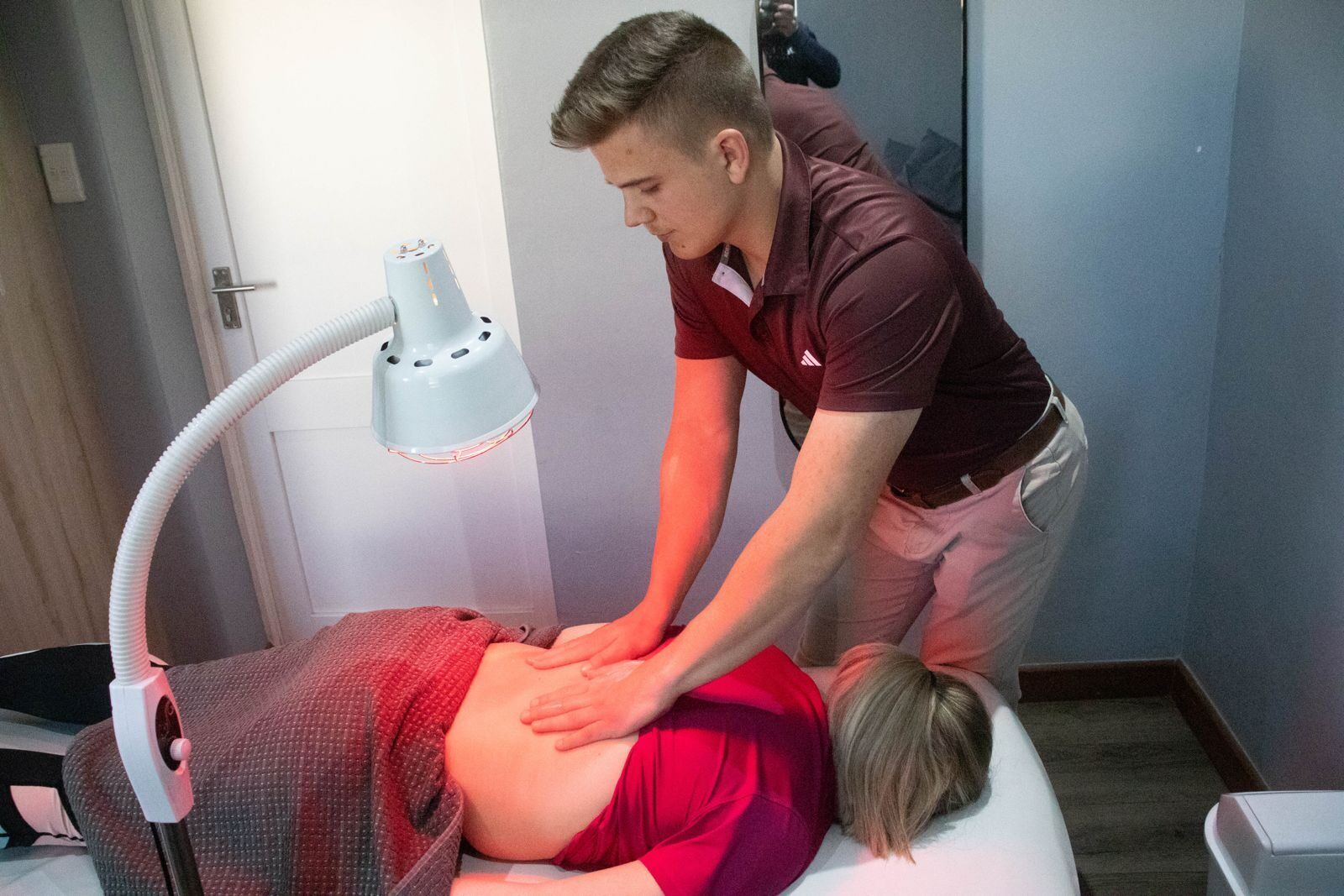
Unlike traditional massage, which often focuses on moving skin and superficial muscle, MFR works by engaging the deeper "barrier" of the connective tissue. Your physiotherapist feels for areas of tightness and applies low-load pressure over a period of several minutes.
- Sustained pressure is held at the restricted area, often for several minutes, rather than quick, repeated strokes
- This duration matters: it's thought to give the fascia time to gradually soften and become more pliable, rather than forcing a quick release
- As the tissue softens, your physiotherapist follows the release, gradually moving deeper or in a new direction as the restriction eases
- The goal is a gradual change in tissue quality and mobility, not an immediate, forceful stretch
Evidence & Research Support
The evidence base for myofascial release is more mixed than for some other manual therapy techniques covered on this site. Some studies support short-term improvements in pain and range of motion when myofascial release is used alongside broader treatment, particularly for chronic tension and mobility restrictions. Other research questions whether the specific mechanism, lasting mechanical change in fascia itself, is what's actually driving the improvement people experience, versus effects on the nervous system's pain processing, or simply the benefit of focused, sustained hands-on attention to a tense area.
This uncertainty doesn't mean myofascial release isn't useful. It means the honest position is that it's a supportive tool with a reasonable, if incompletely understood, rationale, used because many patients report genuine benefit, not because the precise mechanism is fully settled science. As with the other manual techniques used at Peak Physiotherapy, it's applied selectively, based on what your assessment suggests will help, and always alongside active rehabilitation rather than as a standalone treatment.
Individual response varies considerably. Some patients notice a clear, immediate change in tissue mobility and comfort; others find the effect more subtle or short-lived. This variability is part of why ongoing reassessment matters more than a fixed protocol.
Benefits of Myofascial Release
When it's the right fit within your treatment plan, myofascial release aims to:
- Ease deep, chronic muscle tension
- Support range of motion where fascial restriction is contributing to stiffness
- Work alongside exercise and other manual therapy for broader tension patterns
- Support tissue mobility around scar tissue or areas of previous injury
What to Expect During a Session
Myofascial release sessions are calm and unhurried, reflecting the sustained-pressure nature of the technique itself.
- Your physiotherapist will identify areas of fascial restriction through touch, often areas you weren't consciously aware were tight
- Sustained, low-load pressure is applied and held, sometimes for several minutes at a single spot, before gradually moving on
- You may feel warmth, a stretching sensation, or a gradual easing as the tissue responds
- Mild tenderness afterward is possible in previously restricted areas, similar to how tissue can feel after any hands-on treatment, and usually settles quickly
Conditions & Clinical Uses
Chronic back and neck pain
often benefits from myofascial release addressing broader tension patterns contributing to persistent back pain or neck pain that hasn't responded fully to localised treatment.
Widespread or diffuse muscular tension
often benefits from myofascial release as part of a broader management approach, supporting comfort and mobility where tension patterns extend beyond one clear spot.
Post-surgical scarring and tissue restriction
often responds to myofascial release supporting scar tissue mobility once cleared by your surgeon, as part of post-surgical rehabilitation.
Repetitive strain injuries
(e.g. carpal tunnel, tennis elbow) often involve fascial restriction alongside muscle and tendon tightness, see wrist pain and elbow pain for more on these specific conditions.
Headaches linked to upper-body tension
often improve when neck and shoulder fascial tension contributing to the headache pattern is addressed directly, see neck pain for more on headache-related presentations.
Jaw tension and TMJ-related tightness
can involve fascial restriction through the face and neck, see TMJ & headaches for more.
Sports injuries where mobility is restricted
often benefit from myofascial release within broader sports physiotherapy treatment, particularly for thigh and hip presentations where fascial restriction is limiting movement.
How Myofascial Release Fits into Your Treatment Plan
Myofascial release on its own doesn't address the underlying strength, movement patterns, or postural factors that often contribute to fascial tension returning. That's why it's applied within a physiotherapy session that includes:
- A physical assessment to identify which areas of restriction are actually relevant to your symptoms
- Exercise prescription to build strength and address postural or movement factors contributing to tension
- Other manual therapy, such as dry needling or joint mobilisations, where appropriate alongside myofascial release
- Education about posture, movement, and load management relevant to your specific pattern
Myofascial release adds a specific tool for deep, chronic tension. The rest of the session addresses everything else.
Is This the Right Treatment for You?
The best way to know is a proper assessment, not guessing based on what you've read here.
Frequently Asked Questions
How is this different from deep tissue massage?
Massage usually involves repetitive rubbing or kneading. Myofascial release uses sustained, static pressure to engage the connective tissue specifically. It's often slower and more focused on broader tension patterns than a typical massage.
Does myofascial release hurt?
The pressure is firm but generally gentle. You may feel a stretching sensation or mild discomfort as the tissue eases. We keep pressure within your comfort zone throughout, tell us if anything feels too much.
Why does the therapist hold one spot for so long?
Fascia is a dense tissue that takes time to respond. Holding sustained pressure for a few minutes gives the tissue time to actually soften, though individual response varies.
Is it safe after surgery?
Generally yes, once your surgeon has cleared you for manual therapy. It can be useful for keeping scar tissue mobile as you heal, as part of your broader post-surgical rehabilitation.
How many sessions will I need?
This depends on how long the tension has been present and how your tissue responds. Some patients notice change quickly; longstanding or widespread tension typically needs a longer course as part of your overall treatment plan.
Is myofascial release suitable for everyone?
Not always. Certain conditions require caution or a different approach, your physiotherapist will assess whether it's appropriate for you during your initial consultation.
Does medical aid cover myofascial release?
It's typically billed as part of your physiotherapy session, so it's generally covered the same way physiotherapy is under most medical aid plans.
Can myofascial release help with headaches?
Yes, where upper-body fascial tension (neck, shoulders, upper back) is contributing to headache patterns. Often used alongside other treatment for headache-related presentations.
What does "fascia" actually mean?
Fascia is the connective tissue web that surrounds and supports every muscle, bone, and organ in the body. Think of it as packaging material that, when healthy, allows structures to glide and move smoothly against each other.
Why does pain in one area sometimes get treated by working on a completely different area?
Because fascia is a continuous, whole-body system, restrictions in one area can sometimes contribute to tension or altered movement elsewhere. Your physiotherapist will explain the specific connection relevant to your presentation.
Is myofascial release the same as foam rolling?
They share a similar goal, addressing fascial restriction, but foam rolling is a self-administered, more generalised technique, while myofascial release in physiotherapy is a targeted, hands-on assessment and treatment guided by what your specific presentation needs.
How is myofascial release different from cupping therapy?
Both address soft-tissue restriction, but cupping uses suction to lift and decompress tissue, while myofascial release uses sustained manual pressure to engage and soften it. Your assessment will guide which, or both, is appropriate for your presentation.
Can myofascial release be combined with other treatments in the same session?
Yes. It's commonly combined with joint mobilisations, dry needling, or exercise within the same session, depending on what your assessment identifies as appropriate.
Do I need a referral for myofascial release?
No. It's included as part of your physiotherapy session, which doesn't require a referral to book.
Peak Physiotherapy · Mayville, Pretoria
Ready to get moving again?
Book an assessment and find out if myofascial release is right for you — no referral needed.