
Neck Pain Physiotherapy
Assessment and treatment for neck pain, stiffness, and related headaches in Mayville, Pretoria — restoring comfortable, confident movement.
- No referral needed
- Medical aid billed directly
- Full-hour assessment
Introduction
Neck pain and headaches are closely linked, and it's very common for people to experience both at the same time. Research suggests that up to 70% of people will experience neck pain at some point in their lives, and a large proportion of tension-type and cervicogenic headaches originate from the neck and upper shoulder region rather than the head itself.
Neck pain goes by several names depending on the pattern: mechanical neck pain, cervical spondylosis, whiplash-related pain, cervicogenic headache. The label matters less than understanding what's driving it. Long hours at a desk, stress, poor sleep positions, phone use, and previous injuries (including whiplash from a car accident) can all contribute, often leaving people feeling stiff, sore, and mentally drained by recurring headaches.
The good news is that neck-related pain and headaches respond extremely well to physiotherapy, with the right combination of hands-on treatment, movement retraining, and education helping to reduce pain, restore mobility, and prevent symptoms from returning. A full-hour first assessment at our Mayville practice gives time to properly distinguish a neck-driven headache from other headache types, an important first step, since treatment approach differs.
Anatomy & Biomechanics
The neck, or cervical spine, is designed to be both strong and highly mobile, allowing your head to move smoothly while supporting its weight throughout the day. It consists of seven small vertebrae stacked on top of each other, supported by muscles, ligaments, joints, and nerves that work together to control movement and posture. Because the neck is closely connected to the upper back, shoulders, and jaw, tension or stiffness in one area can easily influence the others, which is part of why neck problems and jaw or TMJ symptoms sometimes present together.
When these structures become overloaded, often from sustained postures, stress, or reduced movement variety, the neck can lose its normal movement and muscle balance. This can increase tension, reduce circulation, and irritate sensitive structures, which is why neck problems so often present as headaches rather than just local neck pain. This doesn't mean anything is structurally wrong or "out of place." The cervical spine is resilient, and symptoms usually reflect temporary sensitivity that responds well to the right movement and strengthening approach.
- Cervical vertebrae (C1–C7) – the seven vertebral bodies that stack to form the neck's structure
- Facet joints – small joints at the back of each vertebra that guide rotation and bending
- Intervertebral discs – cushioning and absorbing load between the vertebral bodies
- Deep neck flexors and extensors – the deep stabilising muscles supporting head control and posture
- Upper trapezius, levator scapulae, and suboccipital muscles – larger muscles frequently involved in tension and headaches
- Cervical nerve roots – branching out to supply sensation and movement to the head, shoulders, and arms
What Causes the Pain (Acute vs Chronic)
Neck pain and headaches can start suddenly or develop gradually over time, and understanding the difference is important for recovery.
Acute neck pain or headaches often come on after a clear event: waking up with a stiff neck after sleeping in an awkward position, a sudden increase in gym training, a minor car accident, or an unusually stressful week that leaves the neck muscles tight and guarded. These symptoms can feel intense, but the tissues involved are usually not seriously damaged.
Whiplash (neck injury from a rapid back-and-forth motion, most commonly from a car accident) deserves specific mention. Symptoms can include neck pain and stiffness, headaches, and sometimes pain radiating into the shoulder or arm. Whiplash management is something we take seriously. Recovery generally happens well over time with early, guided movement and structured physiotherapy. It isn't usually immediate, but prolonged immobilisation in a collar tends to slow progress rather than support it.
Chronic symptoms tend to build slowly. Long hours at a desk or laptop, frequent phone use, poor posture habits, reduced upper-back movement, ongoing stress, or returning to exercise too quickly can all place small, repeated stresses on the neck. Over time, these add up and the neck becomes less tolerant to load and movement, often resulting in regular headaches or persistent stiffness.
- Neck pain and headaches are very common
- There is often no single clear cause
- Symptoms usually develop from a build-up of smaller stresses
- The neck's tissues are adaptable and respond well to the right rehabilitation
Common Symptoms
Neck-related headaches can present in a few different ways, and symptoms often vary from person to person. Common symptoms include:
Symptoms are often aggravated by prolonged sitting, desk work, phone use, stress, poor sleep, or holding the head in one position for long periods.
- A dull, aching, or tight feeling in the neck or upper shoulders
- Headaches starting at the base of the skull and moving towards the forehead or temples
- Reduced neck movement, especially when turning the head
- A feeling of pressure or heaviness in the head
- Muscle tightness or tenderness around the neck and shoulders
How This Affects Your Day-to-Day
Neck pain and headaches rarely stay contained to just the neck. They can quietly limit some of the most ordinary daily movements.
- Checking your blind spot while driving, or reversing out of a parking space
- Struggling to focus at your desk once the afternoon headache sets in
- Avoiding turning your head quickly, worried it'll trigger stiffness or pain
- Ending the day mentally drained from a headache you've been pushing through since morning
For many people, it's not just the pain itself, but the fog and fatigue that come with a recurring headache that wear them down.
Why It Might Not Be Improving
A few patterns commonly keep neck pain and headaches lingering longer than they need to:
- Staying in the same fixed posture for hours, whether at a desk or on a phone, without regular movement breaks.
- Relying only on pain medication or occasional stretching, without addressing the neck strength and movement that's actually driving the load.
- Avoiding neck movement out of fear of triggering pain. Understandable, but this tends to increase stiffness rather than protect the neck.
- Not having a clear diagnosis yet. Without knowing whether it's mechanical, whiplash-related, or driven by posture, it's hard to know what actually needs to change.
- Treating the headache in isolation, without recognising the neck as the actual source.
The Solution: Getting the Right Diagnosis
Understanding exactly which pattern is driving your neck pain or headaches, rather than guessing, is the most reliable way to get lasting relief.
Common Diagnoses
Several terms are commonly used to describe neck-related pain. These labels help guide treatment but don't always explain pain severity:
Cervicogenic headache
originates from stiffness or irritation in the neck itself, despite being felt in the head. It's often one-sided, worsened by neck movement or sustained postures, and responds well to physiotherapy targeting the upper cervical spine.
Tension-type headache
is often linked to muscle tension, stress, and prolonged postures, the most common headache type overall, frequently overlapping with neck symptoms.
Mechanical neck pain
describes neck pain related to movement, posture, and load rather than a specific injury or structural cause, the most common presentation seen in practice.
Facet joint irritation
involves sensitivity in the small joints that guide cervical spine movement, often causing pain with rotation or extension.
Whiplash-associated disorder
follows a rapid back-and-forth neck movement, most often from a motor vehicle accident. Presentation varies widely, from mild stiffness to more significant pain and reduced movement, and early, guided physiotherapy generally supports better recovery over time than prolonged rest or immobilisation.
Muscle strain or overload
reflects overworked or fatigued neck and shoulder muscles, common after unaccustomed activity or a stressful period.
Postural-related neck pain
is associated with sustained positions such as desk or phone use, extremely common in office-based and desk-heavy occupations.
Imaging such as X-rays or MRIs often shows age-related changes even in people without pain. These findings don't always explain symptoms, and a physical assessment is usually far more helpful in guiding treatment.
How Physiotherapy Can Help
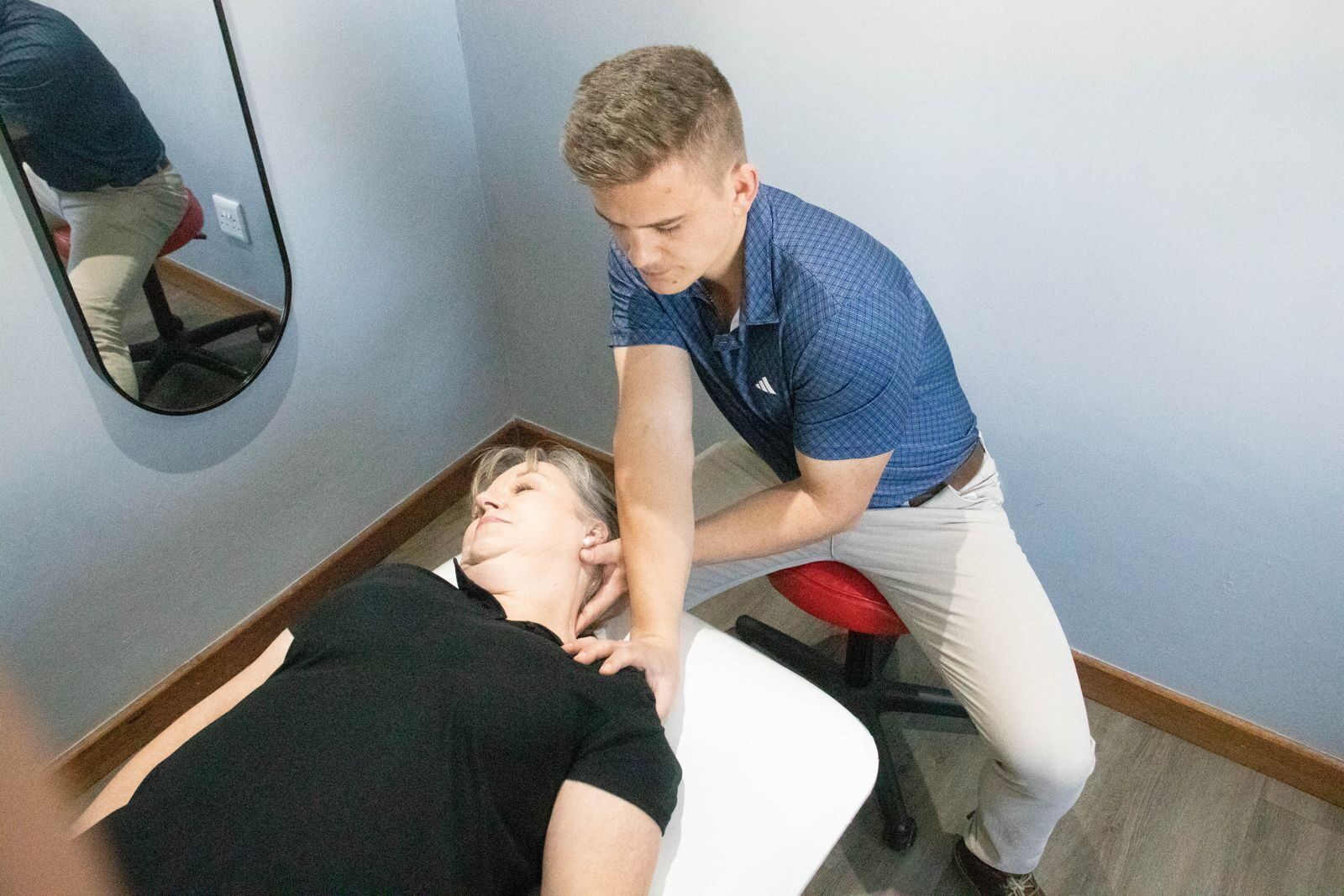
Physiotherapy for neck pain and headaches starts with a thorough assessment: understanding your symptoms, posture, movement patterns, and daily demands, including screen and desk habits. You'll get a clear explanation of what's driving your symptoms and why. Treatment typically includes:
- Joint mobilisations to restore movement in stiff segments of the cervical spine
- Dry needling for muscle tension in the upper trapezius, levator scapulae, and suboccipital muscles: frequent contributors to tension-type and cervicogenic headaches
- Myofascial release for tight, overloaded neck and shoulder muscles
- Therapeutic exercise to rebuild deep neck muscle control and postural endurance
- Education on desk setup, posture, and movement breaks, genuinely useful for prevention, not just treatment
Recovery timelines vary and are always approximate, generally ranging from 4 to 12 weeks depending on the severity of the injury and consistency with treatment. Milder, mechanical presentations often settle toward the shorter end of that range. Whiplash-related presentations, given the nature of the injury, often take longer, toward the higher end, and post-accident cases benefit from early assessment rather than waiting to see if symptoms settle. At our practice in Pretoria, we regularly treat patients from The Moot, Mayville, and surrounding areas for neck pain and headache-related presentations, including post-motor-vehicle-accident cases.
Related Conditions We Treat
Not sure this is the right fit? These related conditions might explain what you're experiencing more precisely: Back & Sciatica Pain, Mid-Back Pain, TMJ & Headaches.
Frequently Asked Questions
Can neck problems really cause headaches?
Yes. A significant proportion of headaches, particularly one-sided headaches or those starting at the base of the skull, originate from the neck rather than the head itself. This is called a cervicogenic headache.
Do I need scans for neck pain or headaches?
In most cases, no. Imaging rarely changes the physiotherapy treatment plan, and clinical assessment is usually more useful for identifying what's driving your symptoms.
How long does physiotherapy take to help neck pain?
Recovery is always approximate, generally ranging from 4 to 12 weeks depending on the severity of the injury and consistency with treatment. Milder, mechanical neck pain often settles toward the shorter end of that range; whiplash-related presentations often take longer.
What does treatment for neck pain involve?
A combination of hands-on techniques (joint mobilisations, dry needling, myofascial release), targeted exercise, and education, tailored to what your assessment shows is actually driving your symptoms.
Should I stop exercising if my neck hurts?
Usually no. Complete rest tends to make neck pain worse, not better. Your assessment identifies which movements to modify and which to keep doing.
Can bad posture really cause neck pain?
Sustained postures, especially prolonged desk or phone use without movement breaks, are a common contributor, though "poor posture" alone rarely explains pain fully. It's usually a combination of posture, movement variety, and load tolerance.
Is my headache from my neck or something more serious?
Most headaches linked to neck pain are cervicogenic or tension-type and aren't serious. Sudden, severe headaches unlike any you've had before, headaches with fever, vision changes, or neurological symptoms warrant urgent medical review rather than physiotherapy first.
Can physiotherapy help after a car accident (whiplash)?
Yes. Recovery from whiplash generally happens well over time with early physiotherapy assessment and guided movement, rather than prolonged rest or wearing a neck collar for an extended period.
Do you treat headaches related to jaw or TMJ issues?
Yes. Neck, jaw, and headache symptoms often overlap. If your presentation involves jaw pain or clicking, see our TMJ & Headaches page as well.
Will I need dry needling for neck pain?
Not necessarily. It depends on your assessment findings. Dry needling is often useful where muscle tension is a significant contributor, but it's one tool among several, not a default for every neck presentation.
Do you bill medical aid for neck pain treatment?
Yes, we bill most South African medical aids directly. Get in touch and we'll confirm your specific plan's benefits before your first visit.
Do I need a referral to see you for neck pain or headaches?
No. You can book directly with us. If your medical aid requires a referral for reimbursement, we'll help guide you through that process.
Peak Physiotherapy · Mayville, Pretoria
Ready to get moving again?
Book an assessment and get a clear plan for neck pain — no referral needed.