
Knee Pain Physiotherapy
Assessment, treatment, and rehabilitation for knee pain in Mayville, Pretoria — helping you return to walking, working, and sport with confidence.
- No referral needed
- Medical aid billed directly
- Full-hour assessment
Introduction
Knee pain is one of the most common reasons people seek physiotherapy, affecting up to 1 in 4 adults at some point in their lives. It can appear suddenly after a twist, fall, or sporting moment, or develop gradually over time through overuse, prolonged sitting, or changes in training load.
Because the knee plays such a central role in walking, work, sport, and daily life, pain here can quickly become frustrating and limiting: climbing stairs, kneeling, or standing from a chair can all become uncomfortable. Knee pain goes by many names depending on where and how it presents, including patellofemoral pain, runner's knee, jumper's knee, meniscus irritation, and ligament sprain, and the label matters less than understanding what's actually driving the load through the joint.
The good news is that most knee pain, including many presentations involving ligament or cartilage changes on imaging, responds very well to physiotherapy and targeted rehabilitation. At Peak Physiotherapy in Mayville, a full-hour first assessment gives us time to understand your specific pattern of knee loading and build a plan from there, including post-surgical rehabilitation for patients referred from Life Eugene Marais Hospital.
Anatomy & Biomechanics of the Knee
The knee is a strong yet adaptable joint designed to bend, straighten, and absorb load during walking, running, jumping, and changes in direction. Rather than being a simple hinge, it relies on a combination of joints, cartilage, ligaments, and muscles working together to control movement and manage force.
Pain often develops not because something is "damaged," but because certain tissues are temporarily overloaded, movement patterns have changed, or strength and control around the joint have reduced. This is why targeted rehabilitation is so effective, even alongside imaging findings.
Understanding this matters because many patients arrive expecting the worst when a scan shows a meniscus tear or early arthritic changes. In most cases, these findings don't tell the whole story. Meniscus tears and cartilage changes are extremely common on imaging in people with no knee pain at all, and the knee is remarkably good at adapting when it's given the right strength and control work. Pain usually reflects how the knee is currently managing load, not permanent damage that can't be addressed.
- Tibiofemoral joint: between the thigh bone (femur) and shin bone (tibia), handling most of the load through the knee
- Patellofemoral joint: where the kneecap (patella) glides within a groove in the femur as the knee bends and straightens
- Meniscus: two C-shaped pieces of cartilage that cushion and distribute load between the femur and tibia
- Ligaments (ACL, PCL, MCL, LCL): providing stability and control during twisting, pivoting, and high-impact movement
- Quadriceps and hamstrings: the major muscle groups controlling knee bending, straightening, and shock absorption
- Nerves: supplying sensation and muscle control to the knee, lower leg, and foot
What Causes Knee Pain (Acute vs Chronic)
Knee pain can begin suddenly or build up gradually, and both patterns are very common.
Acute knee pain often starts with a specific moment: twisting the knee during sport, landing awkwardly from a jump, slipping, or lifting something heavy while the knee is bent. The knee may feel sore, swollen, or unstable in the hours afterward, which can feel alarming, but usually reflects irritation and swelling rather than serious structural damage.
Chronic knee pain is very common and tends to build up over time. It may develop with prolonged sitting, frequent stair use, long-distance running, repeated squatting at work or in the gym, or returning to exercise too quickly after a break. Over time, the tissues around the knee become less tolerant of the loads they're being asked to manage, and small, repeated stresses add up.
Runners in particular often develop gradual-onset knee pain from a rapid increase in training volume or a change in running surface or footwear.
- Knee pain is very common
- There is often no single clear cause
- Pain usually reflects a build-up of load the knee hasn't yet adapted to, not damage
- The knee's tissues are adaptable and respond well to the right rehabilitation
Common Symptoms
Knee pain can present in different ways, depending on the individual and what's driving the load through the joint. Common symptoms include:
- A dull ache or sharp pain around the front, inside, outside, or back of the knee
- Stiffness, especially after sitting or first thing in the morning
- Discomfort when climbing stairs, squatting, kneeling, or standing from a chair
- A feeling of weakness, instability, or reduced confidence in the knee
- Occasional swelling, clicking, or catching
How This Affects Your Day-to-Day
Knee pain rarely stays contained to just the knee. It can quietly limit some of the most ordinary daily movements.
- Hesitating before taking the stairs, especially going down
- Struggling to kneel down to tie a shoelace or pick something up off the floor
- Avoiding a run or a game of padel, worried about how the knee will hold up
- Feeling unsteady or lacking confidence standing up from a low chair or the car
For many people, it's not just the pain itself, but the loss of confidence in the knee that wears them down.
Why It Might Not Be Improving
A few patterns commonly keep knee pain lingering longer than it needs to:
- Avoiding the knee entirely rather than loading it within a comfortable range. This often weakens the surrounding muscles further rather than protecting the joint.
- Stopping all activity out of fear of causing more damage. Understandable, but this tends to reduce strength and control over time rather than help.
- Managing only the symptom, such as ice, occasional stretching, or pain medication, without addressing the strength and control that's actually driving the load through the knee.
- Not having a clear diagnosis yet. Without knowing your specific pattern, patellofemoral, meniscus-related, ligament, or osteoarthritis, it's hard to know what actually needs to change.
- Returning to running, sport, or heavy training too quickly, before strength and control have properly recovered.
The Solution: Getting the Right Diagnosis
Understanding exactly which pattern is driving your knee pain, rather than guessing, is the most reliable way to get back to full confidence.
Common Diagnoses
Many different labels are used for knee pain. As with other joints, a diagnosis is helpful for guiding treatment, but it doesn't always predict pain severity or recovery, and imaging findings often don't match symptoms closely.
Patellofemoral pain syndrome
is pain around or behind the kneecap, often related to how load is distributed as the knee bends, common in runners, cyclists, and anyone who's recently increased training volume or added stairs and hills to their routine. It typically responds very well to targeted strengthening, particularly of the hip and quadriceps.
Meniscus irritation or tear
involves changes to the cartilage inside the knee. Meniscus tears are common on imaging even in people without knee pain, and many meniscus-related presentations improve with physiotherapy, focusing on strength, control, and gradual return to loading, without needing surgery. Some tears do require a surgical opinion; your assessment will help clarify which category you're in.
Knee osteoarthritis
describes normal, often age-related joint changes that don't always cause functional loss and don't necessarily worsen with the right activity levels. Physiotherapy for osteoarthritis focuses on strength, movement, and load management. Exercise is one of the most effective interventions available, not something to avoid.
Ligament sprains (ACL, MCL, LCL)
range from mild stretching to complete tears. The right approach depends on which ligament is involved, how severe the injury is, and, just as importantly, the individual: their sport, activity level, and functional goals. Structured rehabilitation alone is often appropriate; more active or athletic individuals with higher functional demands may need surgical reconstruction followed by staged rehab. Neither path is inherently better. It's a personal decision made as part of your assessment.
Patellar and quadriceps tendinopathy
("jumper's knee") is tendon-related pain linked to repetitive jumping or loading, common in volleyball, basketball, and rugby. Responds well to progressive loading programmes.
IT band syndrome
produces pain on the outside of the knee, common in runners and cyclists, related to how load transfers through the hip, thigh, and knee during repetitive movement. Addressed through hip and thigh strengthening alongside training-load modification.
How Physiotherapy Can Help
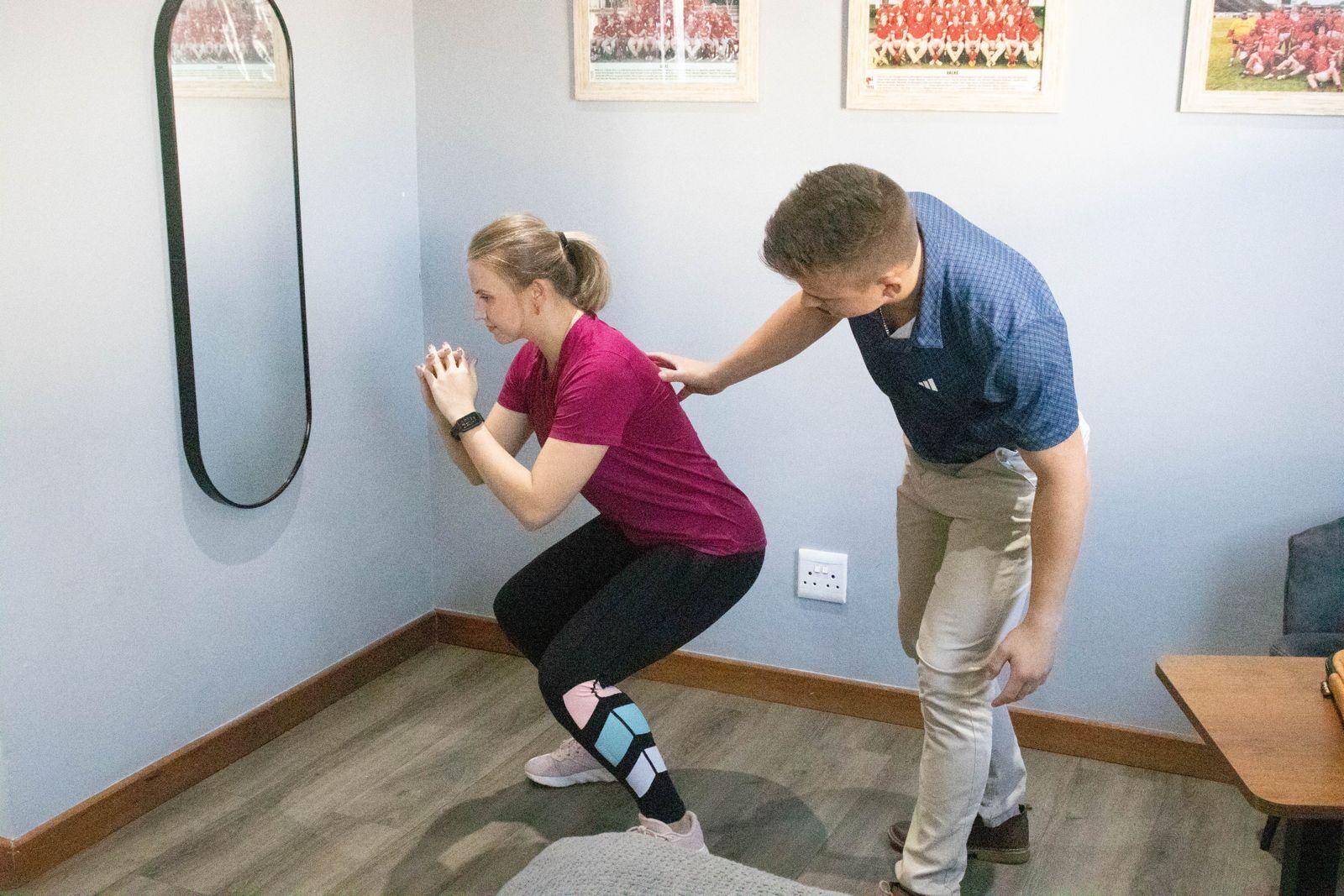
Physiotherapy for knee pain starts with a thorough assessment of your symptoms, daily activities, and how your knee moves during functional tasks: walking, squatting, single-leg control, and (where relevant) running or sport-specific movement. Treatment typically includes a combination of:
- Joint mobilisations to restore movement and reduce stiffness where the joint itself is contributing to symptoms
- Therapeutic exercise: the core of most knee rehabilitation, focused on restoring strength and control across the hip, knee, and ankle
- Movement analysis to identify loading or gait patterns contributing to overuse-type knee pain, particularly useful for runners
- Dry needling where muscle tightness around the knee (quadriceps, IT band, calf) is contributing to symptoms
- Strapping and taping for short-term support during return to activity or sport
- Education on load management: how to modify training, work, and daily activity without complete rest
Recovery timelines vary by diagnosis, and these are always approximations. Patellofemoral pain often improves substantially within 4–8 weeks of targeted strengthening, depending on severity. Ligament and post-surgical rehabilitation follows a longer, staged timeline, often 3–12 months depending on the injury and surgical approach. We regularly support post-surgical knee rehabilitation for patients referred from Life Eugene Marais Hospital, working from surgeon protocols where applicable.
Related Conditions We Treat
Not sure this is the right fit? These related conditions might explain what you're experiencing more precisely: Hip Pain, Ankle Pain, Back & Sciatica Pain.
Frequently Asked Questions
What causes knee pain without an injury?
Knee pain often develops from repeated or excessive load over time rather than a single injury. A training increase, more time on stairs, or a change in activity can all contribute.
Do I need an X-ray or MRI for knee pain?
In most cases, no. Clinical assessment is often more useful than scans alone for guiding effective treatment, and imaging findings frequently don't match symptoms.
Can knee pain improve without surgery?
Yes, in most cases. Even some meniscus tears and ligament injuries respond well to structured physiotherapy without surgical intervention. Your assessment will help determine which category your presentation falls into.
Should I rest or keep moving with knee pain?
Complete rest is rarely helpful. Guided movement usually supports faster recovery and prevents the stiffness and deconditioning that prolonged rest can cause.
Is it bad to run with knee pain?
It depends on the type and severity. Some knee pain settles with modified training load rather than complete stopping; other presentations need a short period off running while strength is rebuilt. This is exactly what your assessment sorts out.
How long does patellofemoral pain take to improve?
Many people notice improvement within 4–8 weeks of consistent, targeted strengthening, though this varies with severity, how long the pain has been present, and consistency with the exercise programme.
Is it normal for my knee to click or crack?
Clicking or crackling without pain or swelling is common and usually not a cause for concern. Clicking accompanied by pain, swelling, or a sensation of catching or locking is worth having assessed.
Can I still go to gym with knee pain?
Usually yes, with modifications. Your assessment identifies which movements to adjust, which to avoid temporarily, and which strengthening work will actually help your specific presentation.
Do you treat post-surgical ACL or meniscus rehab?
Yes. We regularly support post-surgical knee rehabilitation, including patients referred from Life Eugene Marais Hospital, following staged protocols in line with your surgeon's guidance.
Does medical aid cover knee physiotherapy?
Yes, we bill most South African medical aids directly. Get in touch and we'll confirm your specific plan's physiotherapy benefit before your first visit.
Do I need a referral to see you for knee pain?
No. You can book directly. If your medical aid requires a referral for reimbursement, we'll help you sort that out, but it's not required to start treatment.
How many sessions will I need for knee pain?
This depends on the diagnosis, how long you've had symptoms, and your goals (returning to daily activity vs returning to competitive sport). We'll give you an honest, specific estimate at your first assessment.
Peak Physiotherapy · Mayville, Pretoria
Ready to get moving again?
Book an assessment and get a clear plan for knee pain — no referral needed.