
Thigh Pain Physiotherapy
Assessment and rehabilitation for hamstring, quad, and groin injuries in Mayville, Pretoria — helping you return to sport and movement with confidence.
- No referral needed
- Medical aid billed directly
- Full-hour assessment
Introduction
Thigh pain is a common reason people seek physiotherapy, affecting everything from walking and climbing stairs to running, exercising, or simply getting up from a chair. The thigh contains some of the body's largest and strongest muscles, which work hard every day to absorb load, produce power, and support movement. Thigh pain goes by several names depending on the specific pattern involved, including hamstring strain, quadriceps strain, adductor or groin strain, and tendinopathy, and the label matters less than understanding what's actually driving the load through the muscle.
In sport alone, thigh muscle strains account for up to 12–16% of all muscle injuries, making this region particularly prone to overload and irritation. Hamstring strains especially are one of the most frequent injuries in rugby and sprint-based sports, an area with direct provincial rugby physiotherapy experience in this practice. When pain develops, it can feel frustrating and limiting, especially when everyday activities suddenly become uncomfortable.
The good news is that most thigh pain responds very well to the right physiotherapy approach, helping restore strength, movement confidence, and function safely and effectively. At Peak Physiotherapy in Mayville, we treat thigh pain in patients from The Moot, Wonderboom, Les Marais, and Rietfontein, as well as further afield across Pretoria. A full-hour first assessment gives us time to understand your specific pattern and build a targeted rehabilitation plan from there.
Anatomy & Biomechanics
The thigh is designed to be powerful, resilient, and adaptable. It connects the hip to the knee and plays a key role in almost every lower-body movement, from walking and standing to running, squatting, and jumping. Rather than working in isolation, the thigh muscles work together with the hip and knee joints to control load, generate force, and absorb impact.
Thigh pain often develops when these muscles are asked to do more than they are currently conditioned for. Over time, small overloads can accumulate, leading to stiffness, reduced tolerance to load, and pain. A muscle strain doesn't mean the tissue is permanently weakened. Thigh muscle is highly adaptable and, with the right progressive loading, typically returns to full strength and capacity.
Understanding this matters because many patients arrive worried that a strain means the muscle has been badly damaged, or that it will always be vulnerable to re-injury. In most cases, neither is true. Muscle tissue heals well and, with the right structured loading, can be built back stronger and more resilient than before, provided the rehabilitation isn't rushed.
- Quadriceps (front of the thigh) – straighten the knee and help control movements like walking downhill or standing up
- Hamstrings (back of the thigh) – bend the knee and assist with hip movement, especially during running and bending
- Adductors (inner thigh) – help stabilise the leg and control side-to-side movement
- Hamstring and quadriceps tendons – connecting muscle to bone, frequently involved in tendinopathy from repetitive high-load activity
- Sciatic nerve – running through the back of the thigh, sometimes contributing to pain that mimics a hamstring strain
What Causes Thigh Pain (Acute vs Chronic)
Thigh pain can develop either suddenly or gradually over time, and both are very common. In many cases, there isn't one single cause. Pain often results from a build-up of smaller stresses rather than one dramatic injury.
Acute thigh pain usually comes on quickly and may be linked to sprinting, slipping, lifting something heavy, or returning to sport after time off. People often describe a sharp pain, tightness, or sudden loss of strength, sometimes with bruising or swelling in the following days. Even then, injuries are often less severe than they feel initially and tend to heal well with guidance.
Chronic thigh pain develops more slowly and is often related to repetitive load or prolonged positions. Long periods of sitting or standing, increasing training volume too quickly, or compensating for another injury can all contribute. Over time, the muscle becomes less tolerant of the load it's being asked to manage, and symptoms build gradually rather than appearing all at once.
- Thigh pain is very common
- There is often no single clear cause
- Pain usually reflects a load-versus-capacity mismatch, not permanent damage
- Thigh muscle is highly adaptable and responds well to the right rehabilitation
Common Symptoms
Symptoms vary depending on which muscle group and how significant the strain is. Common experiences include:
- A dull ache, tightness, or sharp pain in the thigh
- Discomfort during walking, running, squatting, or stair climbing
- Pain after sitting for long periods
- Stiffness, especially in the morning or after activity
- A feeling of weakness or reduced confidence in the leg
How This Affects Your Day-to-Day
Thigh pain rarely stays contained to just the muscle. It can quietly limit some of the most ordinary daily movements.
- Hesitating before taking the stairs or getting up quickly from a chair
- Wincing walking up an incline or hurrying to catch a taxi
- Avoiding a run, gym session, or game of rugby, worried about how the leg will hold up
- Feeling unsteady or lacking confidence pushing off the affected leg
For many people, it's not just the pain itself, but the loss of confidence in the leg that wears them down.
Why It Might Not Be Improving
A few patterns commonly keep thigh pain lingering longer than it needs to:
- Resting completely rather than loading the muscle within a comfortable range. This often delays recovery rather than protecting it.
- Rushing back to running or sport based on the calendar rather than how the muscle is actually responding. This is the most common cause of hamstring re-injury.
- Managing only the symptom, such as heat, ice, or pain medication, without addressing the strength and load tolerance that's actually driving the problem.
- Not having a clear diagnosis yet. Without knowing whether it's muscular, tendon-related, or referred from the hip or back, it's hard to know what actually needs to change.
- Avoiding strength work out of fear of causing more damage, when structured loading is usually what rebuilds resilience.
The Solution: Getting the Right Diagnosis
Understanding exactly which pattern is driving your thigh pain, rather than guessing, is the most reliable way to get back to full strength and confidence.
Common Diagnoses
Hamstring muscle strain
causes pain at the back of the thigh, often occurring during running, one of the most common injuries in rugby, sprinting, and field sports. Return-to-sport timing after a hamstring strain is criteria-based rather than calendar-based, since re-injury risk is high if rushed.
Quadriceps muscle strain
involves overload of the front thigh muscles, often from sprinting, kicking, or rapid deceleration.
Adductor (groin) strain
causes inner thigh pain linked to side-to-side movement, common in football, rugby, and any sport involving change of direction or kicking.
Muscle tightness or overload
is sensitivity from repetitive load without an actual tear, very common and generally responds quickly to targeted rehabilitation.
Referred pain
describes pain felt in the thigh with a source from the hip or lower back. This is an important distinction, since treatment differs depending on the true source.
Tendinopathy
is gradual tendon overload rather than a single injury, common in the hamstring or quadriceps tendon with repetitive high-load activity like sprinting or jumping.
How Physiotherapy Can Help
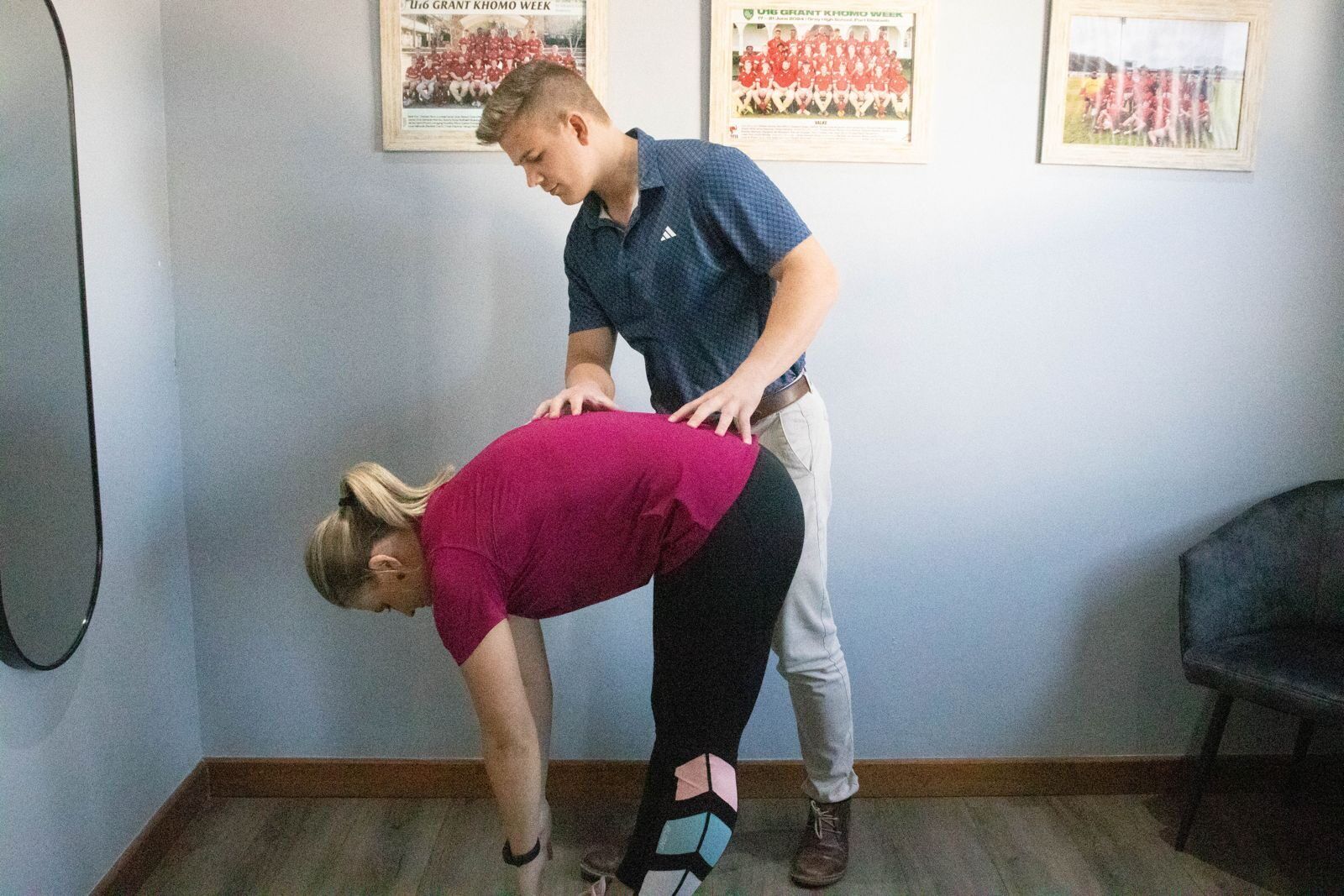
Physiotherapy for thigh pain starts with a thorough assessment to understand your symptoms, movement patterns, and contributing factors from the hip, knee, or lower back. You'll receive a clear explanation of what's going on and a plan that makes sense. Treatment typically includes:
- Therapeutic exercise: progressive strengthening is central to hamstring, quad, and adductor strain rehabilitation, and to reducing re-injury risk
- Dry needling for muscle tightness contributing to pain, particularly in the hamstrings, quads, or adductors
- Movement analysis for runners and sprinters, to identify loading patterns contributing to recurring strains
- Strapping and taping for support during return to sport or training
- Electrotherapy used selectively for pain and swelling management in the early stages of a more significant strain, alongside active rehabilitation
- Criteria-based return-to-sport guidance, particularly important for hamstring strains, where returning too early is the most common cause of re-injury
Recovery timelines vary and are always approximate, generally ranging from 4 to 12 weeks depending on the severity of the injury. Milder strains and tightness often settle toward the shorter end of that range, while more significant hamstring or quad strains typically take longer, toward the higher end, before a full return to sport. At Peak Physiotherapy in Pretoria, serving The Moot, Mayville, and surrounding areas, our focus is restoring function, confidence, and long-term resilience, particularly relevant given the practice's direct provincial rugby experience with hamstring and thigh injuries.
Related Conditions We Treat
Not sure this is the right fit? These related conditions might explain what you're experiencing more precisely: Hip Pain, Knee Pain, Ankle Pain.
Frequently Asked Questions
What causes thigh pain without an injury?
Thigh pain can develop from repeated load or overuse without a specific injury moment. A training increase, prolonged sitting, or compensating for pain elsewhere can all contribute.
How long does thigh pain take to heal?
It depends on severity, and estimates are always approximate, generally ranging from 4 to 12 weeks. Milder strains and tightness often settle toward the shorter end of that range, while more significant hamstring or quad strains typically take longer.
Do I need a scan for thigh pain?
Not usually as a first step. Clinical assessment guides treatment in most cases; imaging is reserved for more significant injuries or when recovery isn't progressing as expected.
Can I exercise with thigh pain?
Often yes, with modification. Your assessment identifies which movements to adjust and which strengthening exercises will actually support recovery.
When should I see a physiotherapist for thigh pain?
If pain persists, limits daily activity, or keeps recurring, a physiotherapy assessment can help identify the cause and guide recovery. Earlier assessment generally supports faster, more complete recovery.
How do I know if I've torn my hamstring or just strained it?
The distinction matters for treatment timeline, and it's best made through clinical assessment rather than guessing. Sudden sharp pain, significant loss of strength, or bruising warrant assessment rather than waiting.
Can physiotherapy prevent hamstring injuries from recurring?
Yes. Hamstring strains have a high recurrence rate when rehabilitation is incomplete or return to sport is rushed. Criteria-based, staged return-to-sport rehabilitation significantly reduces this risk.
Is it normal for thigh pain to move around or change location?
Somewhat. Muscle-related pain can shift slightly with activity and recovery. Pain that's sharply localised, worsening, or accompanied by significant swelling warrants assessment.
Can lower back problems cause thigh pain?
Yes. Pain can be referred into the thigh from the lower back or hip, which is why a proper assessment looks beyond just the thigh itself.
Do you treat rugby-related hamstring and thigh injuries specifically?
Yes. With direct provincial rugby physiotherapy experience through Valke Rugby Union, hamstring and thigh injuries in contact and running-based sport are a regular part of practice.
Does medical aid cover thigh pain physiotherapy?
Yes, we bill most South African medical aids directly. Get in touch and we'll confirm your specific plan's benefit.
Do I need a referral to see you for thigh pain?
No. You can book directly. If your medical aid requires a referral for reimbursement, we'll help guide you through that.
Peak Physiotherapy · Mayville, Pretoria
Ready to get moving again?
Book an assessment and get a clear plan for thigh pain — no referral needed.